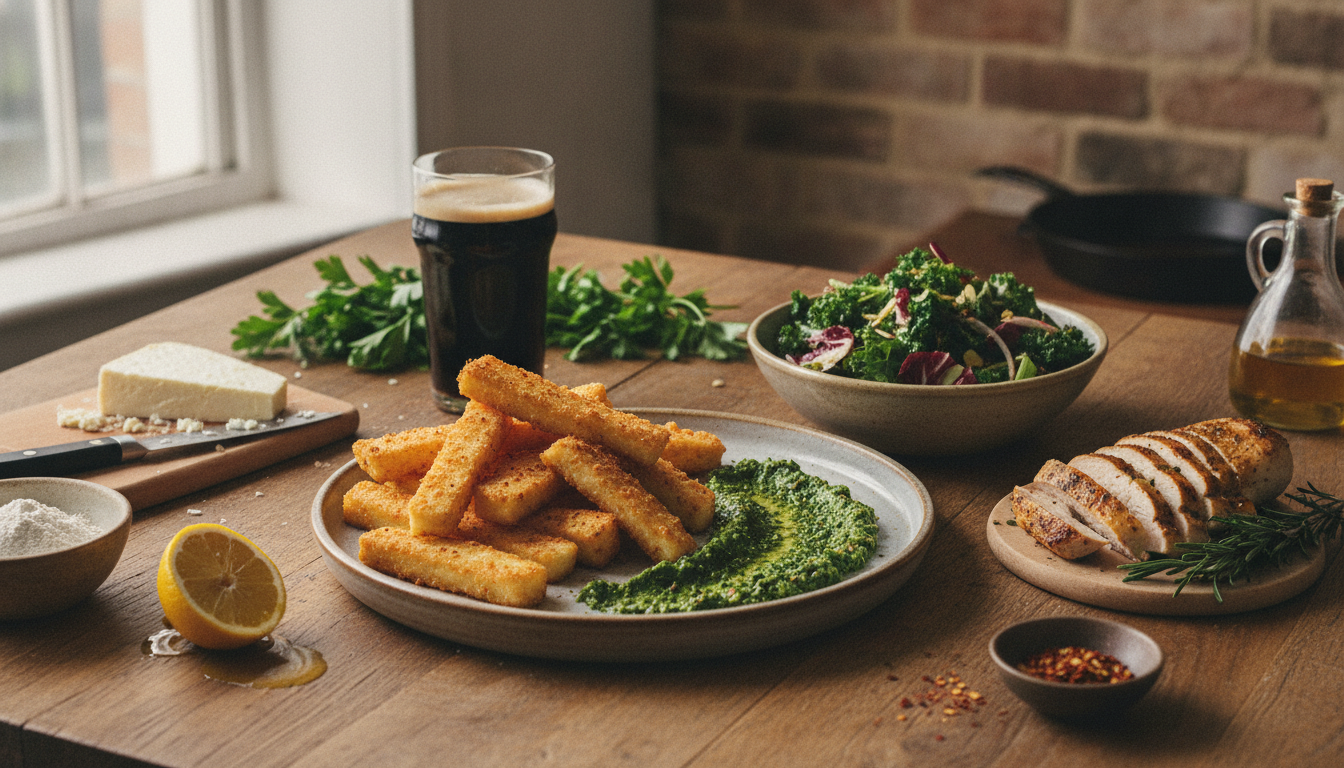
How to Turn Classic Pub Snacks into Balanced Weeknight Dinners
Recipe IdeasPub food relies on salt, fat, and deep-frying to pair well with beer. On its own, a plate of fries or fried cheese feels like an indulgence or an incomplete nibble rather than a satisfying evening meal.
The fix is not to strip away the crisp crusts or rich cheeses, but to rebalance the plate. Adding sharp acids, bitter greens, and targeted proteins cuts through heavy fat and provides the structural weight a proper dinner requires.
By paying attention to contrast—matching hot and oily elements with crisp, sour, or punchy sides—classic tavern bites transform into clear, structured weeknight meals.
1. Garlic-Chili Skillet Fries with Lemon-Arugula Salad and Grilled Chicken
Garlic and chili skillet fries bring heat and rich fat to the table. Pairing them with a sharp, lemon-heavy arugula salad provides an astringent counterpoint that cleanses the palate between bites. Sliced grilled chicken breast adds necessary lean protein to turn a bar snack into a complete plate.
2. Classic Tavern Pizza with Thin Veggies and Pickled Fennel Salad
Thin-crust tavern pizza covered in cheese benefits immensely from a bright, crunchy side dish. A salad of thinly shaved raw fennel tossed in red wine vinegar cuts through cooked mozzarella and salty cured meats. It supplies a crisp, refreshing crunch that hot melted cheese lacks.
3. Loaded Potato Skins with Seared Steak Strips and Apple-Cabbage Slaw
Crisp potato skins stuffed with bacon and cheddar are dense and heavy on their own. Adding strips of simple seared flat iron steak builds a rich protein foundation, while a tangy apple-cabbage slaw crushed with cider vinegar breaks up the soft starch. The raw cabbage offers a lively crunch alongside the toasted potato shells.
4. Fried Mozzarella Sticks with Warm Marinara and Tossed Chicory Salad
Melted cheese in a golden breadcrumb shell needs more than just a sweet tomato dip to function as a meal. Bitter chicory and endive greens dressed with a mustardy vinaigrette cut through the heavy creaminess of the fried dairy. The combination creates a pleasant rhythm between warm, gooey saltiness and cold, sharp bite.
5. Buffalo Wings with Charred Broccolini and Creamy Blue Cheese Dip
Spicy chicken wings bring plenty of protein and heat, but a basket of wings often lacks green substance. Serving them next to charred broccolini tossed in fresh lemon juice adds a smoky, slightly bitter vegetal note to balance the cayenne pepper. The vegetable holds up to the thick blue cheese dip without getting lost.
6. Soft Salted Pretzels with Bratwurst and Warm Mustard Greens
Warm soft pretzels supply carbohydrates and salt, forming a natural base for a plate. Adding seared sliced bratwurst delivers protein, while braised mustard greens cooked with vinegar and caraway provide a tangy, dark-green contrast. The sour greens lighten up the dense dough and rich pork sausage.
7. Loaded Nachos with Quick-Pickled Jalapeños and Citrus Shredded Pork
Tortilla chips layered with melted cheese often collapse into a heavy, monotone dish. Topping them with citrus-marinated shredded pork adds lean substance, while an abundant side of quick-pickled jalapeños and red onion brings essential acid. The pickled vegetables slice straight through the melted cheese and sour cream.
8. Crispy Calamari with Garlic-Herb Aioli and Shaved Radish Salad
Deep-fried squid coated in seasoned flour offers crisp crunch and rich texture. A side salad of paper-thin radishes and fresh herbs tossed in lemon juice offsets the hot oil with clean, peppery moisture. The peppery bite prevents the fried coating from overwhelming the palate.
9. Pub-Style Onion Rings with Roasted Turkey Sliders and Dill Pickles
Thick, sweet onion rings fried in beer batter make a satisfying crunch but lack structural protein. Pairing them with simple roasted turkey sliders on small rolls creates a hearty core for the dinner. Sour dill pickles and an acidic vinegar-based mayo bring brightness to the fried batter.
Balancing pub food at home comes down to identifying what the original dish is missing: usually acid, raw texture, and light green vegetation. When rich, salty tavern classics share a plate with sharp slaws or bitter salads, the fat acts as a driver of flavor rather than a heavy burden. The result is a dinner that retains the comfort of a local bar order while eating like a complete, well-thought-out meal.
Open Crave It!