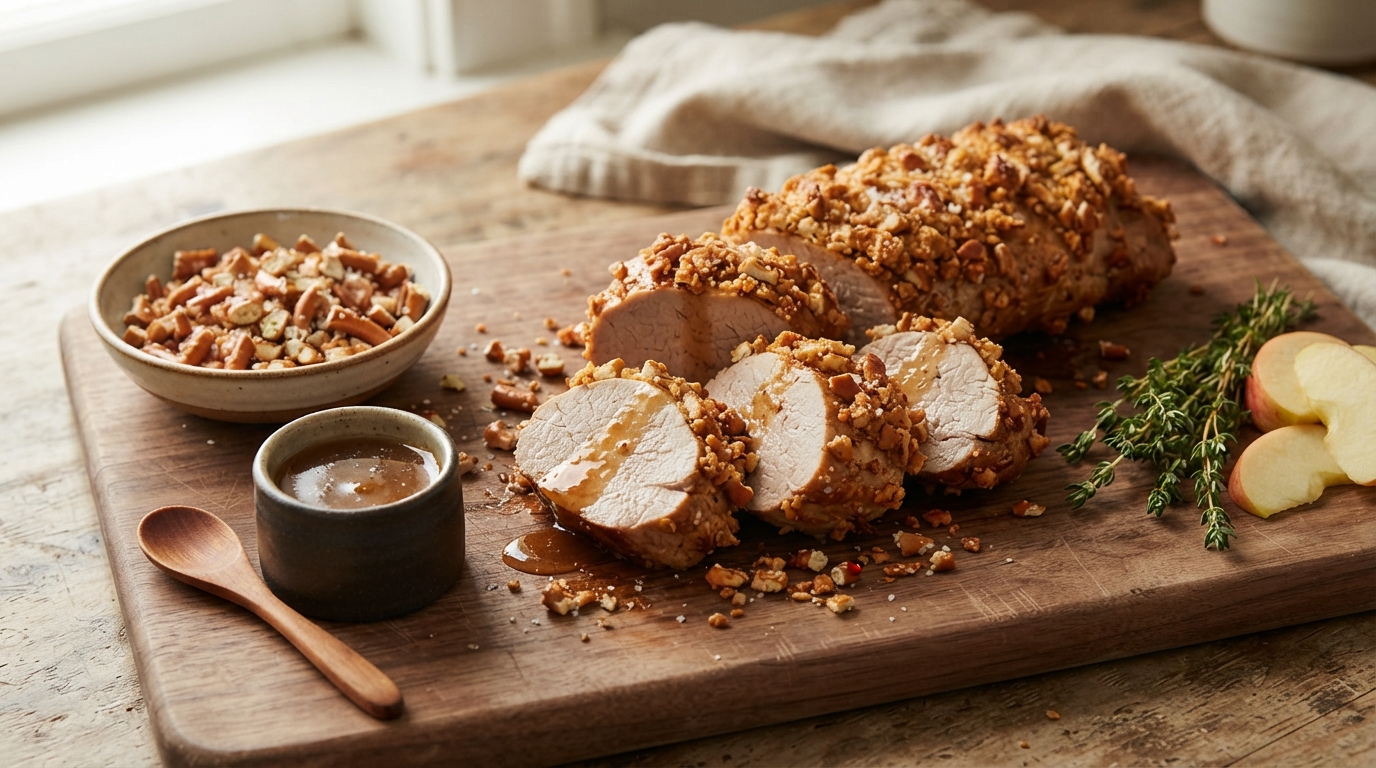
Pretzel-Crusted Pork Tenderloin with Apple Cider Glaze
Recipe IdeasPork tenderloin is lean, uniform, and fast-cooking. Its speed makes it ideal for weeknight cooking, but its lack of surface fat means it rarely develops a substantial crust before the interior overcooks. Standard breading techniques require flour, egg wash, and breadcrumbs, followed by pan-frying in butter or oil. Hard sourdough pretzels offer a shortcut that bypasses the stovetop mess while delivering superior crunch. Sourdough pretzels are baked twice during manufacturing, giving them low moisture content and a dense, shattered structure that holds up under high heat without turning soggy.
The binding agent is coarse grain mustard. Slathered thin, the mustard serves two distinct purposes: its natural viscosity holds the crushed pretzels flush against the meat, while its vinegar and sharp mustard seeds cut through the heavy salt of the crust. Because hard pretzels already contain baked-in fat, salt, and starch, they do not require extra oil to brown properly. When exposed to dry oven heat, the pretzel bits toasted on the exterior form a crisp shell, insulating the tenderloin from drying out while roasting the interior to a tender medium.
Once the tenderloin rests, the pan drippings combine with apple cider for a sharp, glossy reduction. In the hot pan, the rendered pork juices, toasted pretzel bits that fell during roasting, and tart apple cider meet over heat. What boils down is a syrup that brings sweet, sharp, and savory elements together into a unified sauce. The finished dish offers the shatter of a fried cutlet with the simplicity of a single-pan oven roast.
Open Crave It!