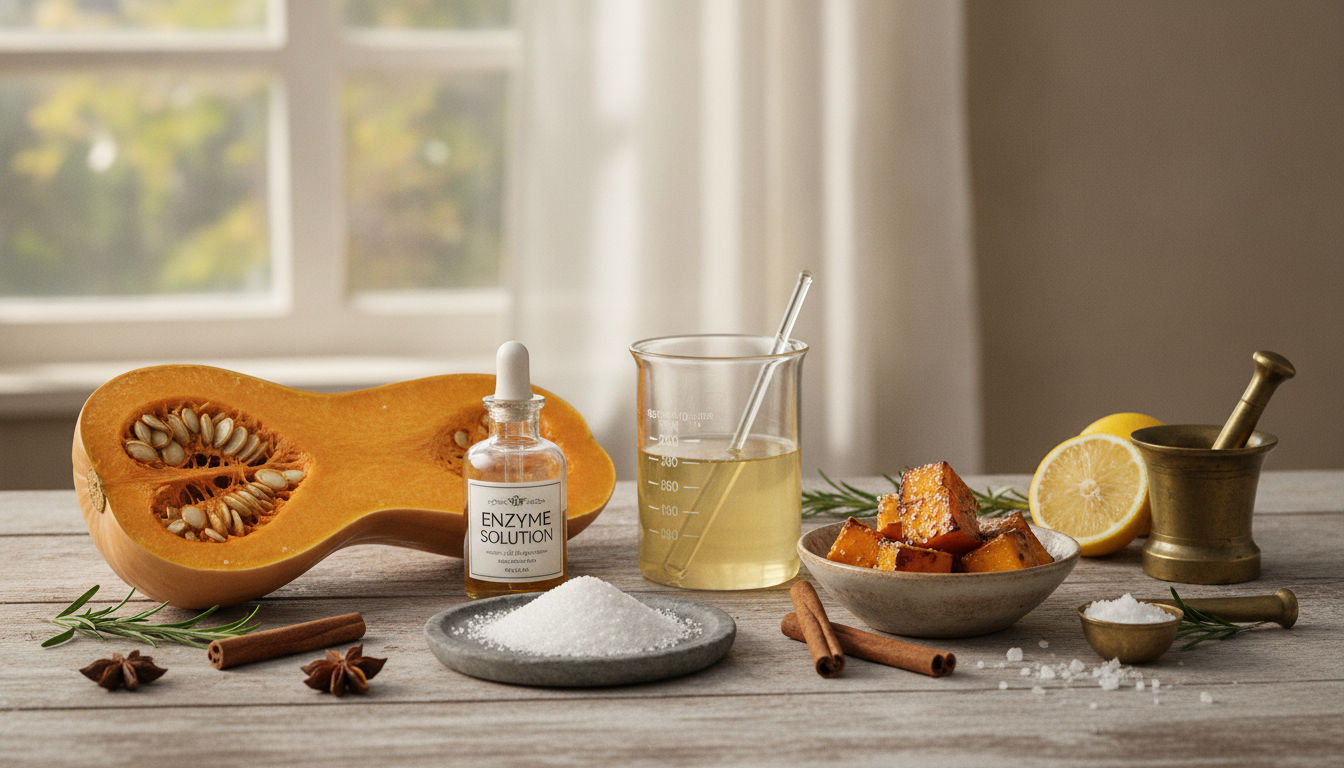
Sweetness, Starch, and the Necessity of Acid in Squash
Food ScienceThe Enzymatic Shift
Raw winter squash is firm, watery, and faintly vegetal. It carries very little perceived sweetness. Yet after forty minutes in a hot oven, the same flesh turns rich, dense, and distinctly sweet. This transformation is not merely a matter of water evaporating to concentrate existing sugars. It is driven by an active chemical process that occurs while the squash heats up.
Winter squash stores its energy primarily as long-chain carbohydrates, or starches. When heat penetrates the flesh, it activates naturally occurring enzymes called amylases. These enzymes begin breaking down complex, tasteless starches into simple sugars, primarily maltose. The reaction begins around 130 degrees Fahrenheit and reaches peak activity between 150 and 170 degrees Fahrenheit.
If squash passes through this temperature range slowly, the enzymes have more time to work. Long, slow roasting maximizes the conversion of starch to sugar. By the time the flesh reaches soft tenderness, a significant portion of its carbohydrate structure has turned into simple sugars. Once the interior surpasses 175 degrees, the enzymes denature and the reaction stops, leaving behind a vegetable that is chemically far sweeter than when it entered the oven.
Why Heat Unleashes Sugar
Beyond enzymatic conversion, high heat introduces caramelization and the Maillard reaction. Caramelization begins around 320 degrees Fahrenheit as the newly formed sugars decompose under heat, creating deep, buttery, and slightly bitter flavor compounds. Simultaneously, the Maillard reaction occurs between amino acids and reducing sugars on the dry exterior of the squash, producing savory notes and crisp edges.
While these reactions add flavor complexity, the overall chemical trajectory of cooked squash leans heavily toward sweetness and density. The natural water loss that occurs during roasting further concentrates these sugars. As a result, cooked squash frequently suffers from a lack of balance. On its own, roasted squash can taste heavy, cloying, and flat.
The human palate registers sweetness as a signal of high calories, which makes it initially appealing. However, without contrast, high levels of sugar paired with dense plant tissue quickly fatigue the palate. To make cooked squash function as a compelling savory dish, that sweetness must be actively counterbalanced.
The Role of Acid on the Palate
In cooking, acidity is the primary tool used to cut through density and sweet notes. Acid stimulates salivation, which speeds up the rate at which flavor compounds hit the taste buds. It adds a sharp, top-note contrast that prevents heavy food from feeling thick or cloying on the tongue.
Acid does not neutralize sugar in a chemical sense; the sugar molecules remain present in the dish. Instead, acid alters human perception. By introducing hydrogen ions to the palate, acidic ingredients trigger a sour taste response that competes with sweet taste receptors. When sugar and acid are present in the right proportions, the brain perceives the flavor as bright, complex, and balanced rather than simply sweet or sharp.
For autumn squash, the choice of acid determines whether the final dish feels flat or vibrant. Plain table vinegar or raw lemon juice will provide sharpness, but nuanced cooking relies on acids that carry their own structural depth, such as aged vinegars, fermented brines, or fruit-based squeezes.
Matching Varieties with the Right Acid
Different squash varieties contain varying levels of starch, moisture, and natural sugar. Consequently, they require different acidic partners to achieve balance.
Butternut and Honeynut squash sit at the high-sugar end of the spectrum. Honeynut, bred specifically for intense flavor, turns exceptionally sweet and dense when roasted. These varieties require assertive, sharp acids with moderate complexity. Sherry vinegar is ideal here. Its nutty, wood-aged profile matches the roasty depth of the squash, while its crisp acetic acid cuts straight through the dense puree or roasty exterior. Pickled shallots or a splash of red wine vinegar serve a similar purpose, offering sharp bites that break up the sweetness.
Kabocha and Buttercup squashes have a flakier, drier texture similar to roasted chestnut. They are moderately sweet but rich in starch. Because their texture can feel dry, they benefit from viscous, slightly fruity acids that provide both moisture and tang. Pomegranate molasses works exceptionally well with Kabocha. It delivers a dense, tart punch with enough natural astringency to balance the dry starchiness of the flesh. Lime juice paired with fresh herbs also cuts the heavy, earthy notes of these varieties.
Acorn and Delicata squashes feature thinner flesh and a milder, more vegetal sweetness. Because their flavor is less intense, heavy vinegars can easily overwhelm them. These varieties pair best with lighter, brighter acids like cider vinegar, white wine vinegar, or fresh citrus juices. A light splash of apple cider vinegar at the end of cooking highlights the natural orchard fruit notes inherent in Delicata without muddying its color or masking its delicate skin.
Application and Timing
The timing of acid application changes how it interacts with the squash. Introducing acid too early in the roasting process can hinder starch breakdown and prevent proper browning. Acid lowers pH, which slows the Maillard reaction. For this reason, high-acid glazes or vinegars should rarely be applied to raw squash before it goes into the oven.
The most effective approach is to apply acid immediately after cooking or as part of a finishing sauce. Hot, freshly roasted squash absorbs liquid rapidly. Tossing hot roasted cubes with a splash of sherry vinegar or a spoonful of pickle brine allows the acid to penetrate the surface layer while the flesh is still hot and porous.
Alternatively, acid can be introduced through cold contrast. A spoonful of crème fraîche brightened with lemon juice, a scattering of quick-pickled onions, or a drizzle of pomegranate molasses applied just before serving creates temperature and flavor contrasts. The cold, sharp accent hits the tongue first, followed by the warm, sweet depth of the squash.
Understanding the conversion of starch to sugar allows a cook to anticipate how a squash will behave under heat. By pairing that knowledge with a deliberate acid strategy, autumn squash shifts from a heavy, overly sweet side dish into a balanced, articulate component of a meal.
Open Crave It!