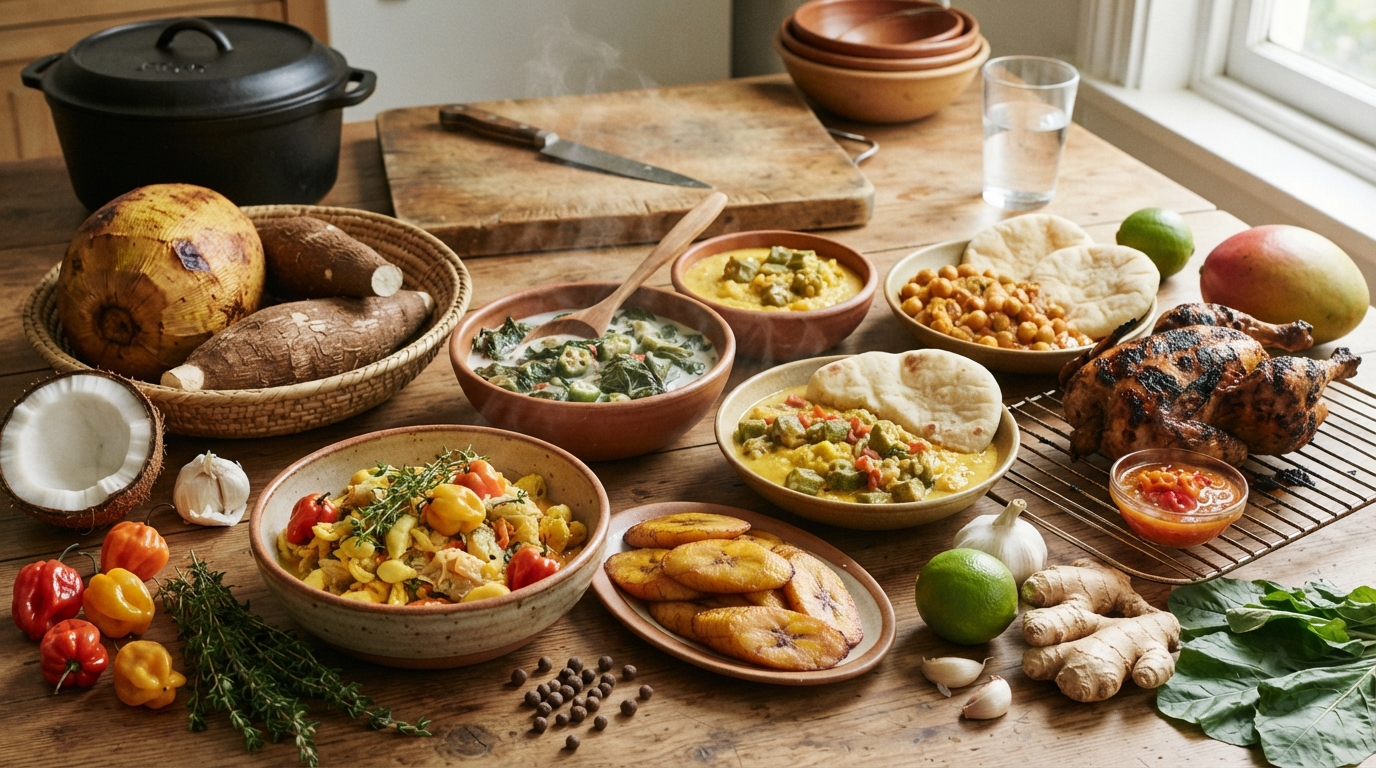
Ten Essential Dishes That Define Caribbean Cooking
CuisineCaribbean cuisine is not a single monolith. It is a dense patchwork shaped by indigenous Arawak and Carib culinary traditions, African techniques brought by enslaved workers, European colonizers, and later East and South Asian indentured laborers.
Across different islands, identical core ingredients—plantains, cassava, scotch bonnet peppers, allspice, and coconut milk—are transformed through entirely different spice profiles and cooking methods. Understanding these dishes means understanding how geography and history created some of the most vibrant flavor traditions in the Western Hemisphere.
These ten dishes represent the foundational flavors of the region, stretching from Jamaica and Trinidad to Puerto Rico and Cuba. They offer a direct line into the techniques and traditions that define Caribbean home cooking.
1. Jerk Chicken
Originating in Jamaica, jerk is a method of marinating and slow-cooking meat over pimento wood. The marinade relies on a pungent paste of scotch bonnet peppers, allspice berries, green onions, and fresh thyme. It yields smoky meat with a complex heat that balances sweetness and woodsmoke.
2. Curried Goat with Roti
Brought to Trinidad and Tobago and Guyana by Indian indentured laborers in the nineteenth century, curry goat is slow-simmered with garlic, turmeric, cumin, and hot peppers until tender. It is served alongside or wrapped inside flaky, layered paratha or dhalpuri roti. The dish highlights the deep influence of South Asian cooking across the southern Caribbean.
3. Mofongo
Mofongo is a Puerto Rican classic made by frying green plantains and mashing them in a wooden mortar with garlic, salt, and crispy pork skin or olive oil. It is shaped into a tight dome and served either on its own or stuffed with stewed shrimp, chicken, or beef. The dish traces its roots to West African fufu traditions adapted to local island produce.
4. Ackee and Saltfish
The national dish of Jamaica pairs preserved cod with the buttery, mild flesh of the ackee fruit. The saltfish is boiled to remove excess salt, then flaked and sauteed with onions, scotch bonnet peppers, tomatoes, and ackee. When cooked, the ackee takes on the delicate texture of scrambled eggs while absorbing the savory seasonings.
5. Pelau
Pelau is a Trinidadian one-pot meal that begins by caramelizing sugar in hot oil to build a deep, dark flavor base. Chicken or beef is browned in the syrup before rice, pigeon peas, coconut milk, and fresh herbs are stirred into the pot to simmer together. It is an ideal introduction to the technique of stewing with burnt sugar, a cornerstone of West Indian cookery.
6. Ropa Vieja
Widely considered the national dish of Cuba, ropa vieja consists of shredded flank steak simmered in a rich tomato, onion, and bell pepper sauce. The meat cooks until tender enough to pull apart into long strands resembling shredded cloth. Its balanced, savory flavor relies heavily on a classic Spanish sofrito base.
7. Callaloo
Popular in Trinidad, Grenada, and Jamaica, callaloo is a leafy green dish made primarily from taro leaves or amaranth. In the southern islands, it is simmered into a silky soup with coconut milk, crab or salted meat, okra, and herbs. It showcases how simple leafy greens can be elevated into a rich, aromatic staple.
8. Cou-Cou and Flying Fish
Cou-cou is the national dish of Barbados, made by cooking cornmeal and okra together into a smooth, thick porridge. It is served alongside flying fish that has been poached or steamed in a tangy tomato, onion, and herb gravy. The meal reflects the island's reliance on coastal seafood paired with starchy staples.
9. Griot with Pikliz
Griot is a Haitian dish featuring chunks of pork shoulder marinated in citrus juice, garlic, and chili before being boiled until tender and fried until crispy. It is almost always served with pikliz, a spicy, pickled cabbage relish softened with lime juice and scotch bonnets. The crunch and acidity of the pikliz cut through the rich, fatty pork.
10. Doubles
Doubles is a beloved street food from Trinidad made of two flat, fried breads called bara filled with curried channa, or chickpeas. It is dressed with a variety of chutneys, including mango, cucumber, and hot pepper sauce. The dish offers a perfect study in contrast between hot spice, cool chutney, and chewy fried dough.
While these dishes span different languages and colonial histories, they share a common thread of resourceful, high-flavor cooking built around local staples. Mastering a few key techniques—such as caramelizing sugar for stews, balancing acid against heat, or mashing cooked root vegetables—unlocks the core logic of the entire region. Choosing where to start comes down to whether you prefer slow-braised comfort foods, vibrant fried street snacks, or aromatic seafood stews.
Open Crave It!