The Chemistry of Dark Baking Ingredients
Food ScienceStandard natural cocoa powder is acidic, sitting at a pH between 5.0 and 5.6. It carries a warm, reddish-brown color and a sharp, fruit-forward acidity. To achieve a deeper shade without synthetic dyes, bakers rely on Dutch processing, a technique developed in the nineteenth century.
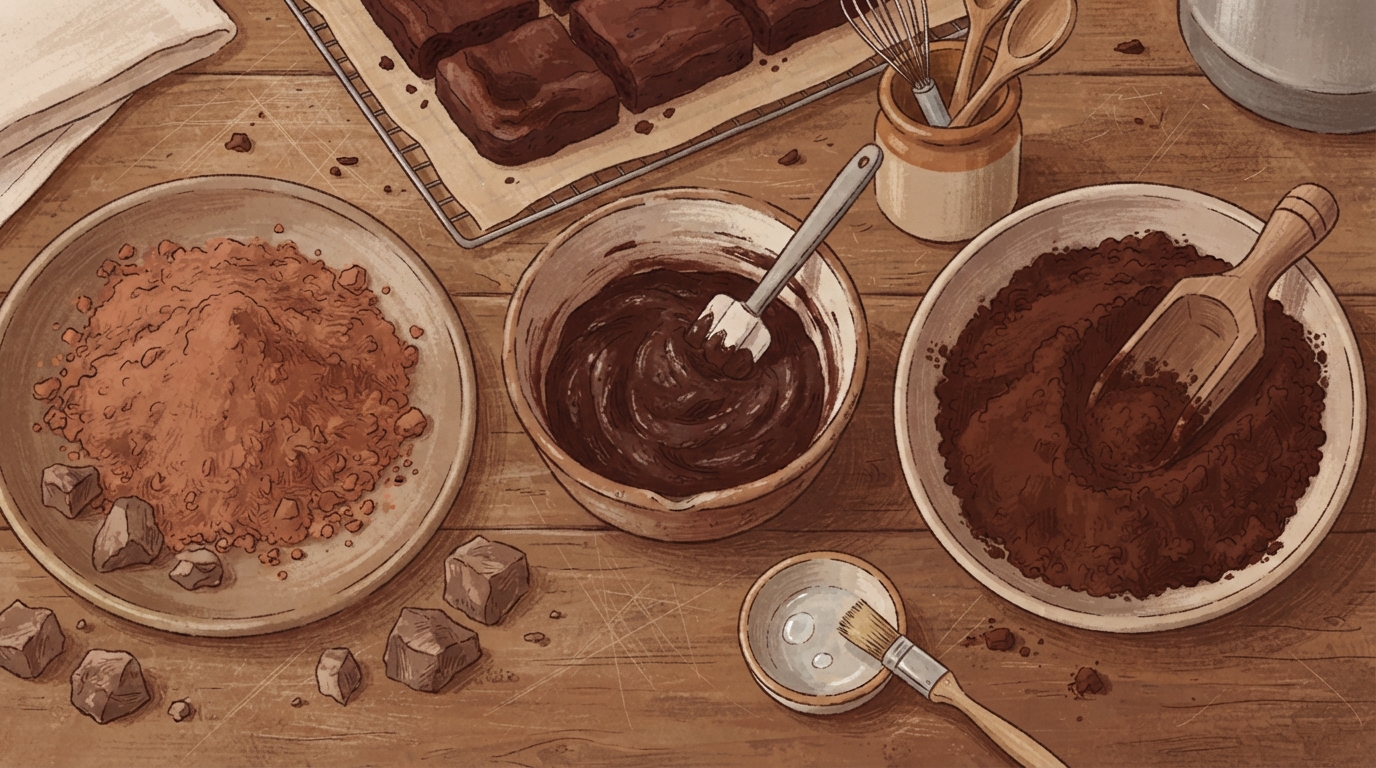
Dutch-processed cocoa is treated with an alkaline solution, usually potassium carbonate. This process neutralizes the natural acidity, raising the pH to around 7.0 or higher. As the pH rises, the cocoa solids darken significantly, shifting from reddish-brown to deep mahogany. The chemical alteration also modifies the flavor, dampening the sharp top notes and emphasizing smooth, roasted, earthy chocolate flavors.
When alkalization is pushed to its extreme, the result is black cocoa powder, which reaches a pH of 8.0 or above. Black cocoa is almost entirely stripped of acidity and features a striking ink-black color. Because it contains virtually no acid, it will not react with baking soda to produce carbon dioxide gas. In cakes, cookies, and pastries, black cocoa must be paired with baking powder or used in combination with standard natural cocoa powder if leavening relies on an acid-base reaction. The flavor of black cocoa is distinct: astringent, heavily roasted, and reminiscent of dark chocolate wafer cookies.
Pitch-Black Sesame Paste
While cocoa provides deep brown and black tones through chemical processing, black sesame seeds offer intense color derived directly from nature. The dark outer hull of the black sesame seed contains high concentrations of melanin-like pigments. When whole, toasted black sesame seeds are ground into a smooth paste, these dark hulls break down into micro-particles suspended within the seed's natural oils.
The resulting paste is dense, glossy, and pitch-black. Unlike water-soluble food dyes that can bleed or fade when exposed to high heat, black sesame paste maintains its color stability through baking. It creates dramatic slate-gray to charcoal-black shades in batters, doughs, ice creams, and custard fillings.
Beyond color, black sesame introduces a rich, savory complexity. Its flavor is deeply nutty, slightly bitter, and rich in oil. When incorporating black sesame paste into baked goods, the additional fat content must be calculated as part of the recipe's liquid fat ratio. The oil content tenderizes the crumb of cakes and cookies while imparting a distinct toasted aroma that sets it apart from traditional sweet fillings.
Caramelization and Thermal Darkening
Sugar itself offers a powerful pathway to natural dark tones through controlled thermal degradation. Carbohydrate molecules undergo complex structural changes when exposed to high heat. In the process of caramelization, simple sugars break down and re-polymerize into large, complex compounds known as caramelans, caramelens, and caramelins.
As heating continues past the golden stage, sugar transitions into deep amber, dark mahogany, and eventually a near-black liquid syrup before carbonization occurs. Pushing caramelization to its limit yields a bittersweet syrup with dramatic visual appeal. The high concentration of caramelin compounds gives these syrups a glossy, translucent dark coat suitable for glazes, sugar glass decorations, and dark baking washes.
Other plant-based sources can supplement this effect. Concentrated dark fruit reductions made from prunes, black currants, or black cherries provide deep purple-black undertones along with natural pectin and fruit sugars. Unrefined dark molasses, rich in concentrated sugarcane solids and minerals, adds an amber-black hue and a bittersweet intensity to doughs and batters.
Flavor Profiles and Strategic Pairings
Using naturally dark ingredients requires careful balancing of taste. High concentrations of black cocoa, heavily caramelized sugar, or black sesame introduce natural bitterness and astringency that can easily overwhelm a baked good if left unchecked.
Black cocoa pairs exceptionally well with ingredients rich in fat and moisture. Dairy products like heavy cream, cream cheese, and butter cushion the stark, dry bitterness of dark cocoa solids. Highlighting black cocoa with bright, high-acid fruit elements—such as red raspberry, passionfruit, or sour cherry—creates a strong visual and flavor contrast. Sweet spices like vanilla and cinnamon also help round out its heavily roasted edge.
Black sesame paste thrives alongside clean, creamy flavors that allow its toasted nuttiness to stand out. White chocolate, condensed milk, and sweet cream cheeses provide a smooth, sweet background that complements the savory depth of the paste. Citrus elements like yuzu, orange, and lemon cut through the dense oiliness of the seed paste, while warm spices like cardamom and ginger enhance its earthy notes.
Deeply caramelized sugars and dark fruit reductions respond well to salt and warm botanicals. Flaky sea salt cuts the inherent bitterness of burnt sugar notes, while warm elements like coffee, roasted nuts, and clove build upon the complex Maillard compounds created during cooking. By relying on the inherent chemistry and natural pigments of these ingredients, visual drama can be achieved alongside genuine flavor depth.
Open Crave It!